
Software
Multi-Vendor Ecommerce Software: How to Launch Your Own Online Marketplace
A single-brand store sells your own products. A marketplace sells everyone's. That shift changes the business completely: you earn a commission on every sale without holding stock, and your catalogue grows every time a new seller joins. It is the model behind the biggest names in online retail, and it works just as well for niche marketplaces in one city, one category or one industry.
A single-brand store sells your own products. A marketplace sells everyone's. That shift changes the business completely: you earn a commission on every sale without holding stock, and your catalogue grows every time a new seller joins. It is the model behind the biggest names in online retail, and it works just as well for niche marketplaces in one city, one category or one industry.
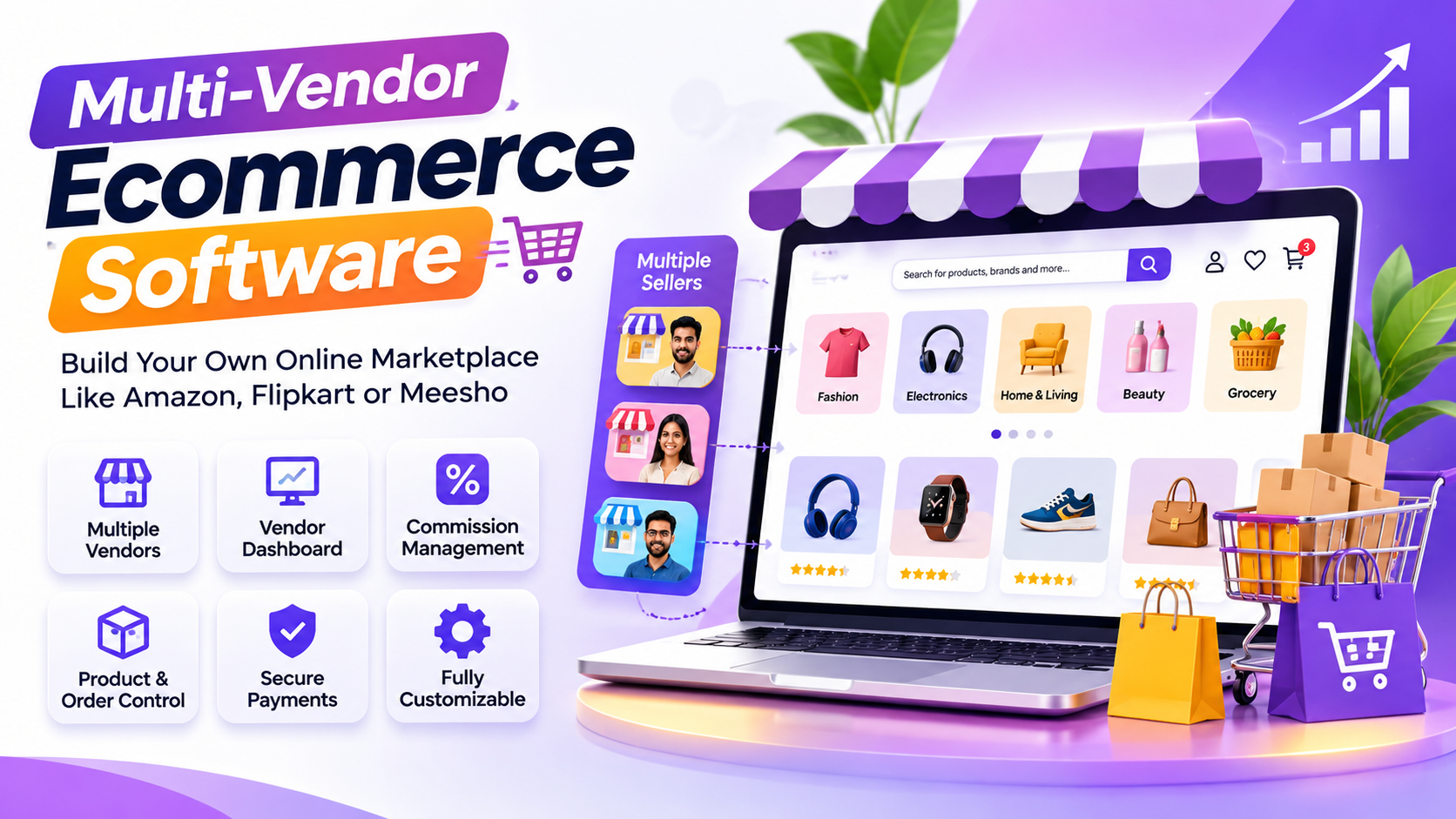
To run one, you need multi vendor ecommerce software that handles sellers, products, orders and payouts at the same time. Sysfo's Multi-Vendor Marketplace software is built for businesses that want their own marketplace, with tools for the operator, the vendors and the shoppers.
What is multi-vendor ecommerce software?
Multi-vendor ecommerce software is a platform where many independent sellers list and sell products under one storefront. The marketplace owner controls the brand, the rules and the commission. Vendors manage their own listings and fulfilment. Shoppers get one cart across all sellers.
It involves three groups of users:
User | What they need |
|---|---|
Marketplace owner | Vendor control, commissions, analytics, marketing |
Vendors | Easy listing, inventory, orders, shipping |
Shoppers | Wide choice, trusted reviews, secure payment, mobile shopping |
Core modules in Sysfo's marketplace software
Vendor management. Onboard and manage sellers from the admin. The product metadata also mentions vendor panels, payouts and product approval.
Commission management. Set and manage vendor commissions on sales. This is your revenue engine.
Product catalogue management. Organise products from many sellers into one clean catalogue.
Order processing. Handle orders that span multiple vendors.
Inventory tracking across vendors. Keep stock accurate for every seller.
Shipping and fulfilment. Configure shipping options and manage fulfilment.
Ratings and reviews. Customers rate both products and vendors, which builds trust and rewards good sellers.
Built-in marketing tools. Promote products and campaigns from inside the platform.
Customisable storefronts. Shape the look of the marketplace to match your brand.
Secure payment gateways. Accept online payments safely.
Analytics. Track sales, traffic and customer behaviour.
Ticketing. Handle customer enquiries and issues with a built-in ticket system.
SEO optimisation. Optimise listings and pages for search engines.
Mobile-friendly shopping. Shoppers browse and buy comfortably on phones.
Marketplace ideas that work in India
You don't need to compete with national giants. Focused marketplaces often win on trust and specialisation:
- Local marketplaces for groceries, bakeries or pharmacies in one city
- B2B marketplaces for building materials, industrial parts or wholesale clothing
- Artisan and handicraft marketplaces connecting makers with buyers
- Category marketplaces for books, electronics refurbishers or organic produce
- Services marketplaces for repairs, tutors or home services
How a marketplace makes money
- Commission per sale. The most common model, set per vendor or per category.
- Listing or subscription fees. Vendors pay a monthly fee to sell.
- Featured placements. Vendors pay to be promoted.
- Delivery and service fees. Charged to shoppers or vendors.
Commission management in the software is what makes model 1 run without spreadsheets.
Steps to launch your marketplace
- Pick a niche where you can attract both sellers and buyers.
- Set your rules: commission rates, product approval, shipping and returns.
- Brand the storefront with your name, logo and design.
- Onboard your first vendors before launch so the store isn't empty.
- Connect payments and test the full order flow.
- Market the marketplace with SEO, social media and ads.
Sysfo supports the marketing side too, with search engine optimization, social media management and Facebook ads services.
Single-vendor store or marketplace?
Question | Single store | Marketplace |
|---|---|---|
Do you own the stock? | Yes | No, vendors do |
Revenue | Product margin | Commission and fees |
Catalogue growth | Limited by your buying | Grows with each vendor |
Complexity | Lower | Higher: vendors, payouts |
If you sell only your own products, Sysfo's E-Commerce Software is the simpler fit. If you need a fully custom build, see ecommerce website development.
Why build with Sysfo
Sysfo Software Solutions has been building software since 2005 and reports 7,500+ projects delivered. The marketplace software comes with a free demo and quote. Related infrastructure products include HostConsole for hosting and MailFlow for business email.
Frequently asked questions
Can I set different commissions for vendors? Yes. Vendor commissions on sales are set and managed from the admin.
Can shoppers review vendors? Yes. Ratings and reviews cover both products and vendors.
Is it mobile-friendly? Yes, the shopping experience is built for mobile.
Does it include analytics? Yes, for sales, traffic and customer behaviour.
How do I get pricing? Request a free demo and quote from Sysfo.
Start your marketplace
Book a free demo or request a quote, or contact Sysfo on +91 76074 20009.