
The original developer has gone
A freelancer moved on or a vendor closed, and nobody understands the code well enough to fix it safely.
Bug fixes, testing, security patches and small enhancements for the software your business already runs — whoever built it. One support contract, agreed response times and a team that has kept business software running for 21 years.

When you need a support partner
Software is never finished. Browsers update, payment gateways change their APIs, tax rules move and users find the bugs testers missed. Without someone responsible, small faults turn into lost sales.
A freelancer moved on or a vendor closed, and nobody understands the code well enough to fix it safely.
Issues are reported on WhatsApp, forgotten in email threads and fixed only when someone senior complains.
There are no test cases, so a change to invoicing quietly breaks reports, and users find out first.
Old frameworks, expired SSL certificates and libraries with published vulnerabilities nobody has updated.
Every small change becomes a new quote and a new negotiation, so budgeting for IT is guesswork.
New report columns, form fields and GST tweaks pile up because no one has time between bigger projects.
Our software maintenance services
We cover the four classic types of software maintenance — corrective, adaptive, perfective and preventive — plus the testing and help-desk support that make them reliable.
Reproduce, fix, test and release defects by priority, with hotfixes for anything that stops sales or billing.
Read more about Corrective Maintenance & Bug FixingA ticket portal, email and phone line for your users, with L1 queries answered and L2/L3 issues routed to developers.
Read more about Help Desk & User SupportManual and automated regression testing, test-case libraries and release sign-off for every change we ship.
Read more about QA & Software TestingKeep software compatible with new browsers, Android and iOS versions, payment gateway APIs and tax rules.
Dependency updates, vulnerability fixes, SSL renewals and framework upgrades before support ends.
Read more about Security Patches & UpgradesSmall features, new reports, form changes and usability fixes delivered from a monthly bank of hours.
Read more about Perfective Maintenance & EnhancementsCode clean-up, log reviews, backup checks and database housekeeping that stop faults before users see them.
Structured handover of software built by another vendor: code audit, documentation and a stabilisation plan.
Release notes, user guides and technical documentation, so knowledge stays with your business, not one person.
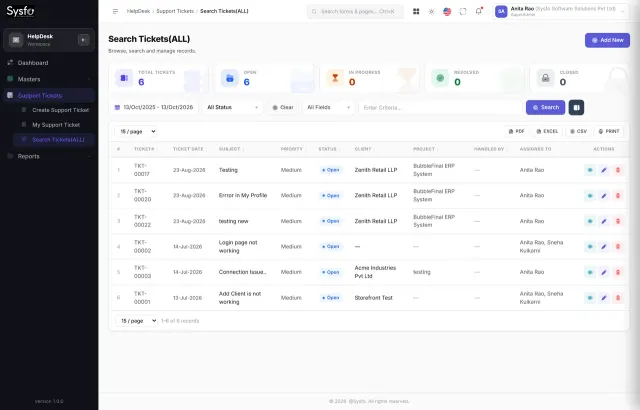
Corrective maintenance
Every issue is logged as a ticket, given a priority from P1 (business stopped) to P4 (cosmetic) and worked to the response time agreed in your SLA. We reproduce the fault, find the root cause rather than patching the symptom, and release the fix through testing so it stays fixed.

Software testing & quality assurance
Most maintenance pain comes from changes that were never tested. We build a library of test cases around the workflows that matter most — orders, invoices, payments, payroll — and run regression tests before each release. Where it pays off, we automate them so every build is checked the same way.
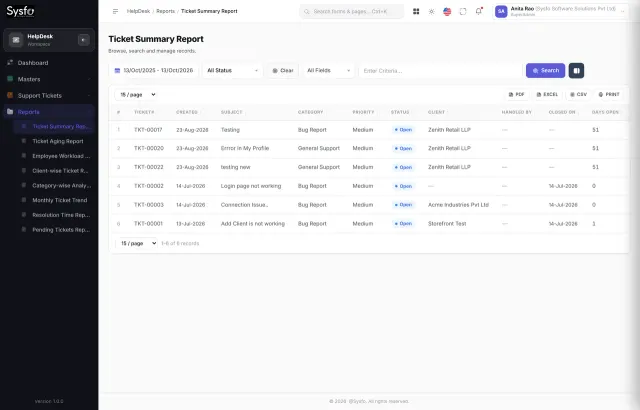
Help desk & service levels
Your users raise tickets through a portal, email or phone, and every ticket is acknowledged, prioritised and tracked to closure. Response and resolution targets for each priority are agreed in the SLA before work starts, and you receive a monthly report showing how we performed against them.

Security patches & framework upgrades
Outdated libraries are one of the most common ways business software is compromised. We track the frameworks and packages your software depends on, apply security patches on a regular cycle, and plan major upgrades — such as moving from an end-of-life .NET or PHP version — before support for them runs out.

Perfective maintenance
A maintenance contract should not stop your software from getting better. A monthly bank of hours covers the small changes users ask for — a new report, an extra field, a changed GST rule, a faster screen — estimated upfront and delivered in planned releases with release notes.
What you get
Clear paperwork and clear reporting, so you always know what was fixed, what changed and what is coming next.
SLA performance
Support roadmap
How our support works
A structured onboarding means we understand your software before the first urgent ticket arrives.
We review the code, hosting and open issues, and tell you honestly what state the software is in.
Scope, priorities, response targets, support hours and a monthly hours bank are agreed in writing.
Access, repository, documentation and walkthroughs with your team or the previous vendor.
Critical bugs fixed, backups verified, dependencies patched and a regression test suite started.
Tickets handled to SLA, planned releases, enhancements from the hours bank and a monthly report.
Support plans
Every plan is quoted as a fixed monthly or per-project price after the free code health check.
Free
A no-obligation review before you commit.
Monthly retainer
Our most popular plan for live business software.
Per ticket
For stable software that rarely needs changes.
Fixed price
Independent testing before a big release.
Why Sysfo
We build software too, so we know what makes code easy or hard to maintain — and we plan for the long term.
Most of our support clients come with software built elsewhere. We audit it, document it and take responsibility for it.
Response targets are in the contract and reported every month, so service quality is visible, not a promise.
No change goes live untested. Regression tests protect the workflows your business depends on.
.NET, PHP, Java, Node.js, React, Angular, Flutter and native mobile — one team for web, mobile and database.
Source code stays in your repository, access is least-privilege, and we sign an NDA on request.
Talk to the engineers who fix your software, by phone, video or at our Lucknow office in IST hours.
FAQ
Our software maintenance and support services cover corrective maintenance (bug fixing), adaptive maintenance (keeping up with new browsers, OS versions and APIs), perfective maintenance (small enhancements), preventive maintenance, security patches, QA and regression testing, and a help desk for your users. Everything runs under a written SLA with agreed response times and a monthly report.
It depends on the size and age of the software, the technologies used, the support hours you need and how many changes you expect each month. After a free code health check we give you a fixed, itemised quote — usually a monthly retainer with an hours bank, or per-ticket pricing for stable software — so there are no surprise bills.
Yes, and most of our support work starts this way. We begin with a code health check, get access to the repository and hosting, document the architecture and key workflows, and fix the most urgent issues first. If source code is missing or incomplete, we tell you plainly what can and cannot be supported.
Corrective maintenance fixes defects. Adaptive maintenance keeps software working when its environment changes, such as a new Android version or a payment gateway API update. Perfective maintenance improves features and usability. Preventive maintenance reduces future risk through refactoring, patching and housekeeping. A good support contract covers all four, not just bug fixes.
Response and resolution targets are agreed per priority before the contract starts. A P1 issue that stops sales or billing gets the fastest response and a hotfix route, while cosmetic P4 issues are scheduled into the next planned release. Support hours, extended cover and escalation contacts are written into the SLA, and performance is reported monthly.
Yes. We run independent QA and software testing projects before major releases: a test plan, test cases, manual and automated regression testing, cross-browser and device testing, and a prioritised defect report. Testing is also built into every maintenance contract, so no fix goes live without regression checks.
On our site, software maintenance and support services focus on the support contract itself: fixing bugs, testing, patching and handling user tickets under an SLA. Application maintenance services go further into running the application — proactive monitoring, performance tuning, platform upgrades, migrations and legacy modernisation. Many clients combine both.
You do. Code stays in your own Git repository or one we create in your name, with every change committed and documented. If you ever move support elsewhere, you keep the code, the documentation and the test cases, and we help with the handover.
Yes. An annual maintenance contract is our most common arrangement for business software in India. It is billed monthly or annually, includes SLA-based bug fixing, security patches and a monthly hours bank for enhancements, and is reviewed each year against the ticket history.
Talk to our support team
Tell us what your software does, what it is built with and what is going wrong. An engineer will call you back within one business day to arrange a free code health check.