Software
SaaS Product Development: A Step-by-Step Guide for 2026
SaaS product development means building cloud software that customers use through a browser or app on a subscription. The process includes validating the problem, designing an MVP, building a secure multi-tenant architecture with user management and subscription billing, launching to early customers, and improving based on usage data. A good SaaS development company handles product, engineering, cloud and support together.
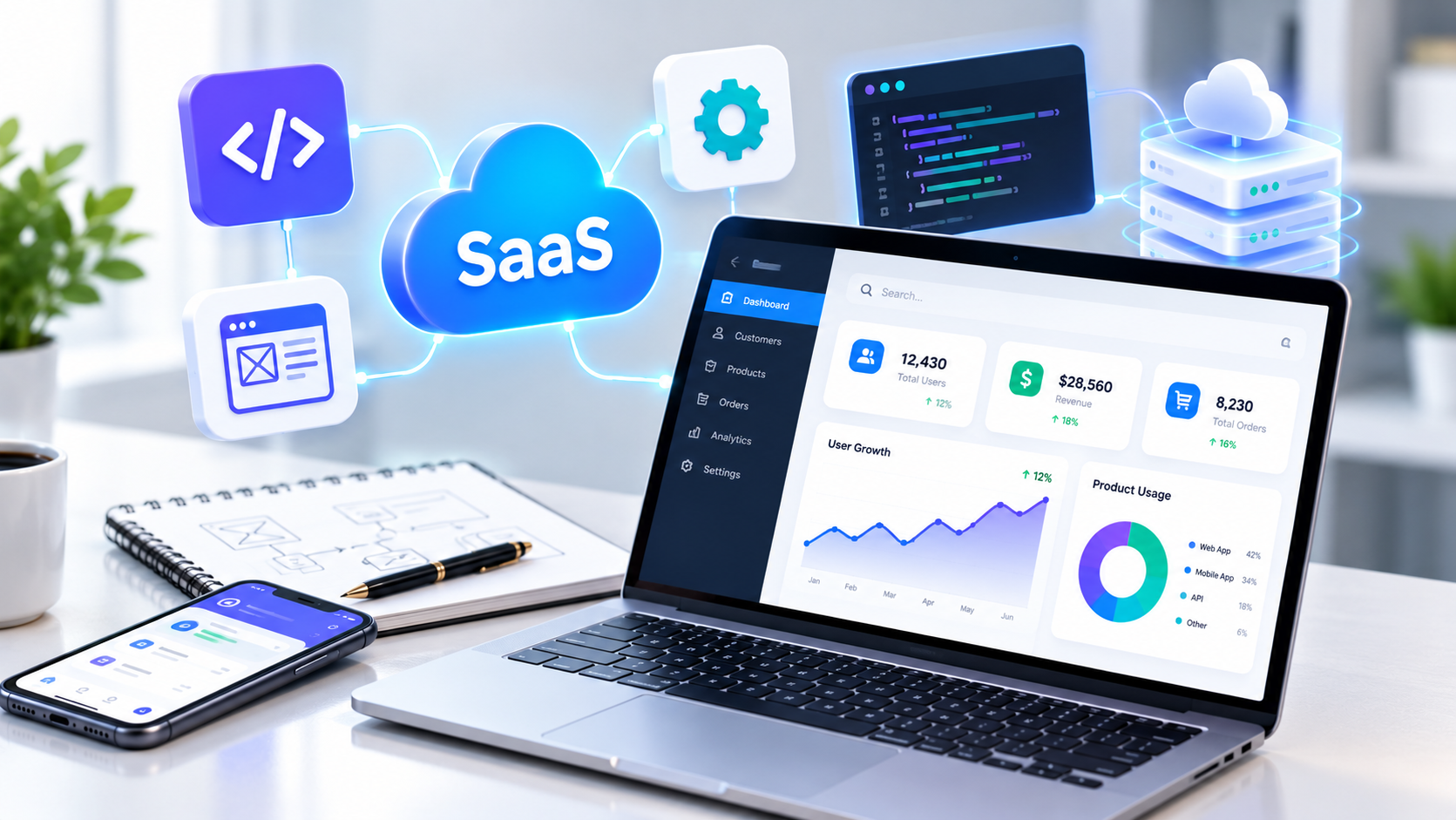
Software-as-a-Service (SaaS) is one of the most attractive business models in tech: customers pay monthly or yearly, and each new customer adds recurring revenue. Indian founders and businesses are building SaaS for HR, billing, education, healthcare, logistics, MLM and more.
This guide explains how SaaS products are built, what features you need from day one, and how to choose the right SaaS development company.
In this guide:
- What makes SaaS different
- The 7-step SaaS development process
- Must-have SaaS features
- Pricing models
- Costs, mistakes and FAQs
What Makes SaaS Different from Regular Software
Regular custom software | SaaS product | |
|---|---|---|
Users | One company | Many companies (tenants) |
Revenue | One-time project | Recurring subscriptions |
Hosting | Client's or vendor's server | Vendor's cloud |
Updates | Occasional | Continuous, for all customers |
Key focus | Fit one workflow | Fit a market, self-service onboarding |
The 7-Step SaaS Development Process
1. Validate the problem
Talk to potential customers. Confirm they have the problem and will pay to solve it.
2. Define the MVP
List the smallest set of features that solves the core problem well.
3. Design UX and architecture
Clickable prototype, plus a multi-tenant architecture, data model and security design.
4. Build in sprints
Weekly or bi-weekly releases with demos and testing.
5. Add billing and onboarding
Subscription plans, trials, payments, invoices and a smooth sign-up flow.
6. Beta launch
Onboard early customers, collect feedback and fix issues.
7. Launch and iterate
Market the product, track usage and churn, and release improvements continuously.
Must-Have SaaS Features
- Multi-tenancy: each customer's data kept separate and secure
- User management: roles, permissions and team invites
- Subscription billing: plans, trials, upgrades, GST invoices, payment gateway
- Self-service onboarding: sign-up, setup wizard, help content
- Admin console: manage tenants, plans, usage and support
- Analytics: usage tracking for product decisions
- Security: encryption, backups, audit logs, 2FA
- APIs and integrations: connect with tools customers already use
SaaS Pricing Models
Model | How it works | Example |
|---|---|---|
Per user | Price per seat per month | HR or CRM tools |
Tiered plans | Basic / Pro / Enterprise | Most B2B SaaS |
Usage-based | Pay for what you use | Messaging, AI, storage |
Freemium | Free plan + paid upgrades | Tools needing wide adoption |
Expert tip: design billing and multi-tenancy from day one. Adding them later is one of the most expensive rewrites in SaaS.
What Affects SaaS Development Cost
- MVP scope and number of modules
- Web only or web + mobile apps
- Integrations and APIs
- Security and compliance needs
- Cloud infrastructure and scaling
- Ongoing development after launch
Common SaaS Mistakes
- Building too many features before validating demand.
- Ignoring onboarding, so trial users never see value.
- Weak tenant data isolation.
- No usage analytics.
- Treating launch as the finish line.
Frequently Asked Questions
What is SaaS in simple terms? Software you use online on a subscription, without installing or hosting it yourself.
How long does it take to build a SaaS MVP? Often 2–4 months, depending on scope.
What is multi-tenant architecture? One application serving many customers, with each customer's data kept separate.
Can I start SaaS from an existing product? Yes. Many companies turn proven internal software into SaaS.
Do I need mobile apps for SaaS? Not always. Start with a responsive web app; add apps when users need them.
Who owns the SaaS code? With the right contract, you own it.
Build your SaaS with Sysfo
Sysfo's web application and full-stack development teams build secure, multi-tenant SaaS products with subscription billing, admin consoles and cloud server management.