Fintech
What Are AePS, DMT and BBPS? A Guide for Retailers and Fintechs
A plain-English explainer on Aadhaar-enabled payments, domestic money transfer and Bharat Connect bill payments, and how distributor and retailer networks deliver them across India.
Walk into a mobile shop, kirana store or cyber café in a small Indian town and you will often see a fingerprint scanner next to the counter. That shop is acting as a mini bank: customers withdraw cash with their Aadhaar number, send money to family in another state and pay electricity bills. The three services behind this are AePS, DMT and BBPS. This guide explains how each works, who offers them, how the distributor-retailer model is organised and what compliance looks like, so retailers and fintech founders can make informed decisions.
Why assisted digital payments matter
UPI has made payments easy for people with smartphones and confidence using them. But many customers still prefer cash, do not have a smartphone, or want someone to help them complete a transaction. Banks cannot open branches in every village, so they work through business correspondents and their agents — local shops that offer basic banking services on the bank's behalf. AePS, DMT and BBPS are the core services these counters provide, and together they form a steady source of footfall and commission for the retailer.
AePS: Aadhaar Enabled Payment System
AePS is a payment system run by NPCI (National Payments Corporation of India) that lets a customer use their bank account through Aadhaar authentication. The customer does not need a card, PIN or phone — just their Aadhaar number, the name of their bank and a fingerprint.
How an AePS transaction works
- The retailer selects the service, such as cash withdrawal, and enters the customer's Aadhaar number, bank and amount.
- The customer places a finger on a registered biometric device connected to the retailer's computer or phone.
- The biometric data is sent, encrypted, for authentication against Aadhaar, and the request goes to the customer's bank through NPCI.
- The bank debits the customer's account and the retailer's wallet or account is credited.
- The retailer hands over the cash and gives the customer a receipt.
Services available through AePS
- Cash withdrawal and, where the bank supports it, cash deposit.
- Balance enquiry.
- Mini statement of recent transactions.
- Aadhaar-to-Aadhaar fund transfer, where supported.
The customer's bank account must be linked to their Aadhaar number. The retailer needs a biometric scanner certified with an RD (Registered Device) service, and usually completes merchant eKYC with the bank or service provider before going live. Transaction limits and the number of free transactions are set by banks and change from time to time.
DMT: Domestic Money Transfer
DMT lets a customer walk in with cash and send it to any bank account in India. It is widely used by migrant workers sending money home. The service is offered by banks through their business correspondent networks and typically settles to the beneficiary's account through IMPS, so money usually reaches the recipient within minutes.
How a DMT transaction works
- The sender (remitter) is registered once with their mobile number, verified by OTP, plus the KYC details the bank requires.
- The recipient's bank account number and IFSC are added and can be verified before the first transfer.
- The retailer collects the cash, enters the amount and the system shows the fee and total.
- The transfer is confirmed with an OTP (and sometimes biometric authentication) and the retailer's wallet is debited.
- The customer receives a receipt with the transaction reference.
RBI regulates domestic money transfer through the banks that offer it, and it has tightened the framework over time, including stronger verification of remitters. Rules on limits, KYC and authentication are applied by the sponsor bank, so always follow your bank partner's current instructions.
BBPS: Bharat Bill Payment System, now Bharat Connect
BBPS is an interoperable bill payment system developed by NPCI and now operated by NPCI Bharat BillPay Ltd under the brand Bharat Connect. It connects thousands of billers — electricity, water, gas, broadband, DTH, FASTag, insurance, loan repayments, credit cards and more — through one standard network.
Customers can pay through any Bharat Connect channel: bank apps, UPI apps or an agent at a retail counter. When a retailer takes payment, the flow is simple: choose the biller, fetch the bill using the customer's consumer number, confirm the amount, collect payment and print the receipt. Because the system is standardised, payments are tracked end to end and customers can raise complaints through a common process.
Retailers usually join as agents under a Bharat Connect Operating Unit (BBPOU) — a bank or an RBI-authorised non-bank entity — often through an aggregator or API partner.
Who uses AePS, DMT and BBPS?
- **Customers** in semi-urban and rural areas, daily-wage and migrant workers, elderly people and anyone who prefers cash or assisted service.
- **Retailers** such as mobile and recharge shops, kirana stores, photocopy and cyber cafés, who earn commission per transaction and gain footfall.
- **Distributors** who build and fund networks of retailers in a district or region.
- **Fintech companies and BC networks** that contract with banks and API partners and run the platform the whole network uses.
How the distributor-retailer model works
Most AePS, DMT and BBPS businesses are organised as a hierarchy, because no single company can sign up and support thousands of shops on its own.
- **Company or admin:** holds the agreements with banks and API partners, sets the services, commission and rules, and runs the platform.
- **Super distributor:** a regional partner who appoints and funds distributors.
- **Distributor:** appoints retailers, tops up their wallets and supports them day to day.
- **Retailer:** serves customers at the counter.
Money moves through prepaid wallets. A retailer tops up their wallet (or receives credit from the distributor), and each DMT or bill payment is debited from it. AePS withdrawals work the other way: the retailer pays out cash and their AePS wallet is credited, then settled to their bank account. Commission is usually defined in slabs by service and amount, and split automatically between retailer, distributor and super distributor on every transaction.
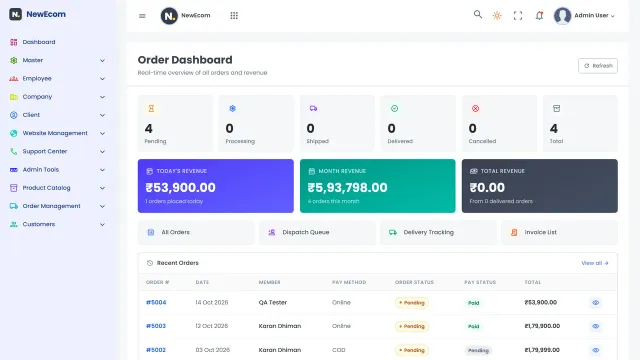
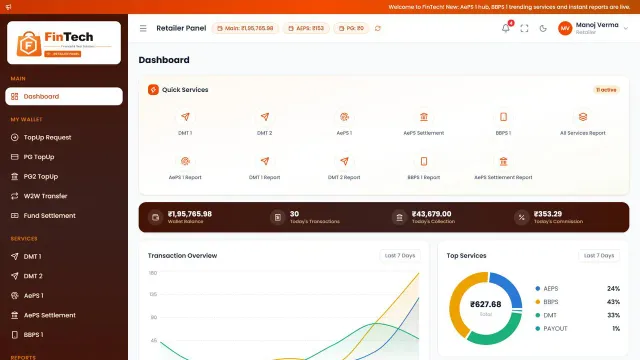
Running this well needs strong software: role-based panels, wallet ledgers, commission slabs, settlement, per-service reports and a retailer app. That is exactly what FinTech software for AePS, DMT and BBPS is built to provide. If your network focuses on recharges and bill payments, a mobile recharge portal covers mobile, DTH and bill categories with a retailer and distributor portal.
Partner banks, API providers and compliance
A software platform alone does not let you offer these services. The money moves through regulated entities:
- **Sponsor banks** offer AePS and DMT through their business correspondent arrangements.
- **Bharat Connect operating units** onboard agents for bill payments.
- **API providers or aggregators** often connect smaller networks to these banks and operating units.
- **NPCI and RBI** set the rules for the underlying systems.
Practical compliance points for any operator include agent KYC and onboarding records, merchant eKYC for AePS, certified biometric devices, never storing customers' full Aadhaar numbers or biometric data, transaction PINs and device controls for staff, complaint handling, and complete audit trails. Rules change, so take professional and legal advice on your specific model and follow the current instructions of your partner bank.
What to look for in AePS, DMT and BBPS software
- All services on one login, with a retailer mobile app as well as a web panel.
- Multiple API providers per service, so the counter is not blocked when one provider is down.
- Wallets with top-up approval, wallet-to-wallet transfers and automatic refunds for failed payouts.
- Configurable commission slabs split across the hierarchy.
- Per-service and combined reports with export, and a ticket system for support.
- Security: role permissions, transaction PIN, trusted devices, masked Aadhaar and an audit log.
Sysfo builds and configures this kind of platform, and also offers custom API development when you need to connect new partners. Every project is priced with a fixed, itemised quote after we understand your services, partners and network size. You can read more in our FinTech product spotlight.
Frequently asked questions
What is the difference between AePS, DMT and BBPS?
AePS lets a customer withdraw cash, check balance or get a mini statement from their bank account using Aadhaar and a fingerprint. DMT lets a customer send cash to any bank account in India. BBPS, now Bharat Connect, lets customers pay electricity, DTH, FASTag, gas, water and many other bills. A retailer can offer all three from one counter.
What does a retailer need to start AePS services?
A retailer needs to be onboarded through a bank, business correspondent network or service provider, complete KYC and merchant eKYC, and use a biometric scanner certified with an RD service. They also need a computer or phone with internet and an account on the platform that provides the AePS service, plus a wallet or bank account for settlements.
Is BBPS the same as Bharat Connect?
Yes. BBPS (Bharat Bill Payment System) was developed by NPCI and is now operated by NPCI Bharat BillPay Ltd under the brand name Bharat Connect. The service is the same: an interoperable network that lets customers pay bills from thousands of billers through banks, apps and agent counters, with standard receipts and complaint handling.
How do retailers earn money from AePS, DMT and BBPS?
Retailers earn commission on transactions, usually defined in slabs by service and amount. On DMT a customer fee may also apply. The company sets commission rules on its platform and the software splits each commission automatically between the retailer, distributor and super distributor. Exact rates depend on your bank and API partner agreements.
Do I need a licence to start an AePS, DMT and BBPS business?
You generally work under regulated partners rather than holding your own licence: sponsor banks for AePS and DMT, and a Bharat Connect operating unit for bill payments, often through an API provider. Requirements depend on your business model and change over time, so take professional legal advice before launching a network.