Software
How to Build a Mobile Game in 2026: Process, Tech Stack and Cost
Mobile games are among the most downloaded apps in India, played on everything from budget Android phones to the latest iPhones. Whether you are a startup with a game idea, a brand that wants a branded game, or an educator building a learning game, the path from idea to the Play Store follows the same steps.
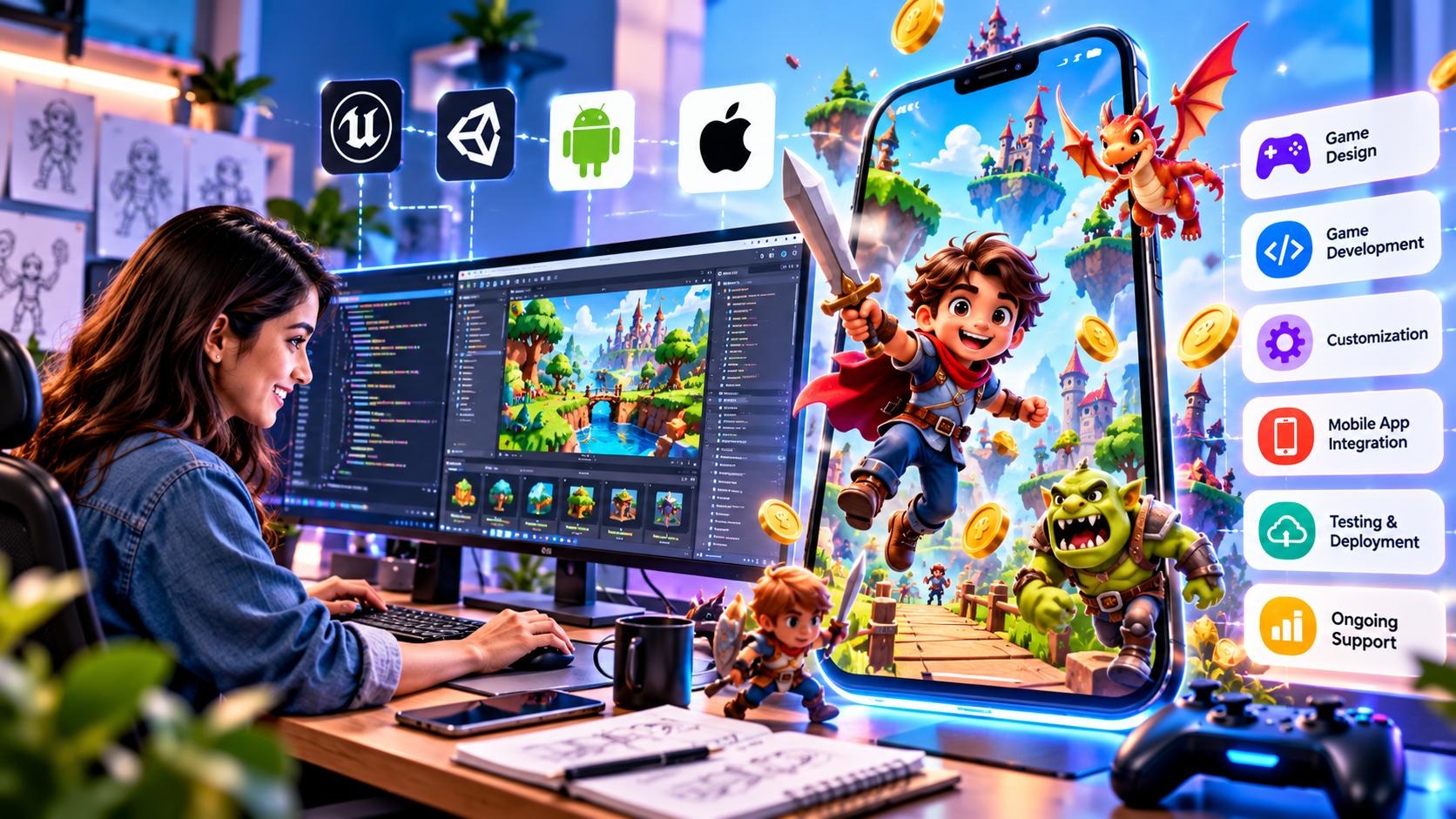
Mobile games are among the most downloaded apps in India, played on everything from budget Android phones to the latest iPhones. Whether you are a startup with a game idea, a brand that wants a branded game, or an educator building a learning game, the path from idea to the Play Store follows the same steps.
This guide explains the mobile game development process, which engine and tech stack to choose, what drives the cost, and how games earn money in 2026.
The 7-Step Mobile Game Development Process
- Concept and game design document. Define the genre, target players, core gameplay loop, levels, characters and how the game earns money. A clear design document prevents costly changes later.
- Prototype. Build a playable rough version of the core mechanic in 2–4 weeks. Test it with real players: if the core loop isn't fun, no amount of graphics will fix it.
- Art and sound. Create characters, environments, UI, animations, music and sound effects in a consistent style (2D, 3D, pixel or cartoon).
- Full development. Build all levels, menus, progression, saving, multiplayer, leaderboards and in-app purchases, with weekly playable builds.
- Backend and analytics. Set up player accounts, cloud saves, leaderboards, push notifications and analytics so you can see how people actually play.
- Testing and soft launch. Test on many devices, fix bugs and performance issues, then release in a limited market or to a small audience to tune difficulty and retention.
- Launch and live operations. Publish on Google Play and the App Store, then keep players engaged with updates, events, new levels and seasonal content.
Choosing a Game Engine and Tech Stack
Option | Best for | Why teams choose it |
|---|---|---|
Unity | 2D and 3D mobile games of most genres | Huge asset store and community, exports to Android, iOS and web |
Unreal Engine | High-end 3D games with realistic graphics | Top-quality visuals, best for powerful devices |
Godot | 2D games and indie projects | Free and open source, lightweight |
Flutter (with Flame) | Simple casual games inside a regular app | One codebase, easy to add games to an existing Flutter app |
HTML5 (Phaser, PixiJS) | Browser and instant games, branded mini-games | Plays in any browser without install, easy to share |
For the backend, common choices are Firebase or a custom API (Node.js or .NET) with a database for player data, leaderboards and multiplayer. Analytics tools such as Firebase Analytics show where players drop off.
What Affects the Cost of a Mobile Game?
There is no single price for a game, because a simple puzzle game and a 3D multiplayer game are very different projects. These factors decide the budget:
- Game type and scope: number of levels, characters, modes and features.
- 2D or 3D: 3D art, animation and optimisation take much more time.
- Art style: simple flat art costs less than detailed hand-drawn or realistic graphics.
- Multiplayer: real-time multiplayer needs servers, matchmaking and anti-cheat, which adds significantly to the cost.
- Platforms: Android only, iOS only, both, or also web.
- Backend features: accounts, cloud saves, leaderboards, events and admin panels.
- Post-launch updates: live games need ongoing content and server costs.
The smart way to control cost is to launch a focused first version (a minimum viable game), learn from real players, and invest more in what they enjoy.
How Mobile Games Make Money (Without Real-Money Gaming)
Model | How it works |
|---|---|
In-game ads | Rewarded videos, interstitials and banners shown to free players |
In-app purchases | Players buy cosmetic items, extra levels, hints or boosters |
Season / battle pass | A paid pass that unlocks rewards over a season |
Subscription | Monthly access to premium content or ad-free play |
Premium (paid) game | Players pay once to download |
Brand sponsorship | Brands pay for a custom game or in-game placements |
Under India's Online Gaming Act 2025, games where users stake money to win money are prohibited, so stick to models like these that sell entertainment, not winnings.
If you are an operator in a country where real-money gaming is licensed and legal, Sysfo also offers PlayZone, a ready real-money gaming platform with 25 games, a single wallet and responsible-gaming tools. It is not for the Indian market, and licences stay with the operator.
Frequently Asked Questions
How long does it take to build a mobile game? A simple casual game can take a few weeks to a couple of months. A larger game with multiplayer, many levels and 3D art can take six months or more.
Should I launch on Android or iOS first? In India, Android has far more users, so most teams launch there first. If your audience is international or premium, launching on both is common.
Which engine is best for a beginner game project? Unity is the most common choice for mobile games because of its tools and community. For simple 2D or browser games, Godot or HTML5 frameworks are lighter options.
Can I add a game to my existing app? Yes. Casual games, quizzes and gamified features can be built into an existing app, for example with Flutter and Flame or an HTML5 game inside a web view.
Do I own the game's source code? When you hire a development partner for a custom game, make sure the contract gives you the source code and IP. At Sysfo, source code for custom builds belongs to the client.
Turn your game idea into reality
Sysfo's game development team designs and builds casual, puzzle, multiplayer, educational and branded games for Android, iOS and the web, with backend, leaderboards and post-launch support. Share your idea for a free consultation and a fixed, itemised quote.