Business
New Labour Codes and Your Payroll: The 50% Wage Rule Explained for Indian Employers
If your payroll looks different this year, you are not alone. India's four new Labour Codes came into force on 21 November 2025, replacing 29 older central labour laws (source). For HR and payroll teams, the biggest daily change is a new definition of "wages" and the rule that comes with it. This guide explains how the new labour codes affect payroll, what the 50% wage rule means and what to change in your salary structures.
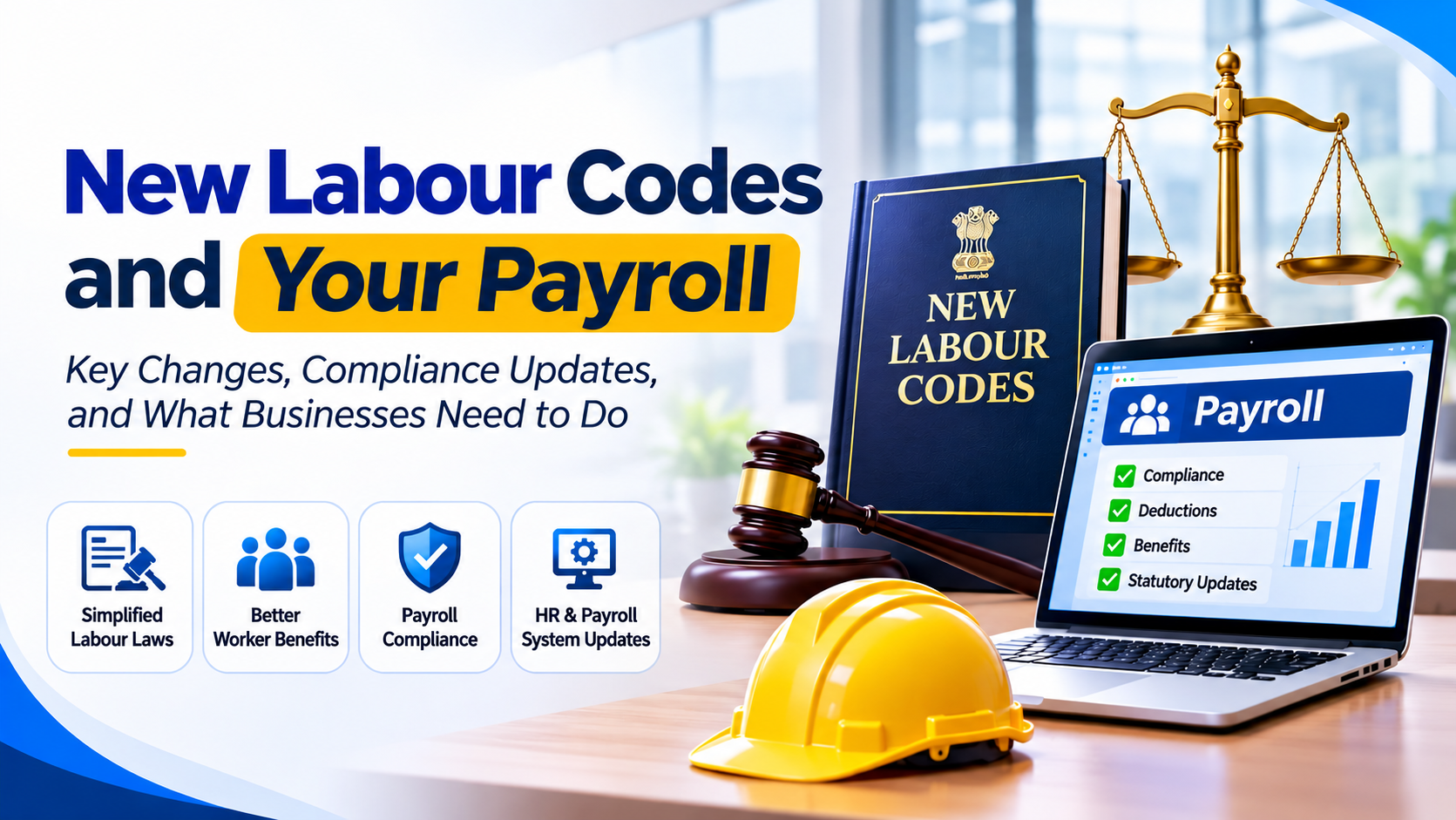
If your payroll looks different this year, you are not alone. India's four new Labour Codes came into force on 21 November 2025, replacing 29 older central labour laws (source). For HR and payroll teams, the biggest daily change is a new definition of "wages" and the rule that comes with it.
This guide explains how the new labour codes affect payroll, what the 50% wage rule means and what to change in your salary structures.
The four Labour Codes
Code | What it covers |
|---|---|
Code on Wages, 2019 | Wages, minimum wages, bonus, payment timelines |
Industrial Relations Code, 2020 | Trade unions, standing orders, disputes |
Code on Social Security, 2020 | PF, ESI, gratuity, maternity, gig workers |
Occupational Safety, Health and Working Conditions Code, 2020 | Safety, working hours, welfare |
The Ministry of Labour notified the Central Rules under all four codes in May 2026, while state rules continue to roll out.
The 50% wage rule in plain words
The Ministry of Labour has confirmed the core requirement: basic pay plus dearness allowance must be at least 50% of total remuneration (source). If allowances make up more than half of pay, the excess is added back to "wages".
Why it matters: wages are the base for PF, gratuity and several other statutory payments. A bigger wage base usually means higher PF and gratuity costs and, for many employees, a lower take-home even if CTC is unchanged.
A simple example
Component | Old structure | Compliant structure |
|---|---|---|
Basic + DA | ₹15,000 (30%) | ₹25,000 (50%) |
HRA and allowances | ₹35,000 (70%) | ₹25,000 (50%) |
Total monthly pay | ₹50,000 | ₹50,000 |
In the compliant structure, PF and gratuity are calculated on a higher base. The exact effect depends on whether PF is capped in your policy, so model each grade before changing.
Other payroll changes to note
- Faster full and final settlement. Final wages must be paid within two working days of an exit (source).
- Gratuity for fixed-term staff after one year of service.
- Higher contract labour threshold, from 20 to 50 workers.
- State-by-state differences while state rules are finalised.
Payroll checklist for 2026
- Audit every salary structure against the 50% rule.
- Recalculate PF, ESI and gratuity on the new wage base.
- Explain take-home changes to employees before the payslip arrives.
- Set up a process to pay full and final within two working days.
- Review fixed-term contracts for gratuity eligibility.
- Track state rules for each location where you have staff.
- Keep records and reports ready for inspection.
How payroll software helps
Most of these changes become formulas, eligibility rules and deadlines inside payroll. Sysfo HRMS & Payroll Software reads attendance and approved leave, applies salary adjustments and appraisals with effective dates, recovers advances and produces payslips and a payroll report. Employee records hold salary, department and employee type, so you can review structures grade by grade. Ask Sysfo during the demo how salary components and statutory calculations can be configured for your Labour Code setup.
Frequently asked questions
When did the new Labour Codes start? 21 November 2025, with Central Rules notified in May 2026.
What is the 50% wage rule? Basic pay plus DA must be at least 50% of total remuneration.
Will take-home pay fall? For many employees with low basic pay, yes, because PF contributions rise.
How fast must full and final be paid? Within two working days of exit.
Do state rules matter? Yes. Track rules for each state where you employ people.
Get payroll ready
Book a free HRMS demo or contact Sysfo.
General information only. Confirm details with a labour law advisor.